




PUMO servo press - core advantages and comprehensive comparison with traditional hydraulic/pneumatic presses
PUMO servo presses quickly replace traditional hydraulic and pneumatic presses in the field of precision assembly, with core advantages reflected in the following aspects:
① High precision fully closed-loop force position control and 100% quality traceability
The hydraulic press relies on the overflow valve to adjust the system pressure, and the actual pressure installation force can fluctuate by ± 5% to 10% FS due to oil temperature, seal leakage, and valve core hysteresis. Moreover, the closed-loop without displacement can only be limited by the dead stop block; Pneumatic compressors rely on pressure regulating valves to set cylinder thrust, which is more affected by fluctuations in gas source pressure and has no position feedback. The PUMO servo press improves the control accuracy of the pressing force to ± 0.5% to ± 1% FS and the position repeatability accuracy to ± 0.01mm through a servo closed-loop system. Each press automatically stores a force displacement curve, which can trace the operator, time, batch, peak force, endpoint position, and judgment results. It meets the traceability requirements of IATF16949 and AS9100 in the automotive/aviation industry, which is difficult for fluid transmission equipment to achieve.
② Significant energy-saving, environmental protection, and adaptability to clean workshops
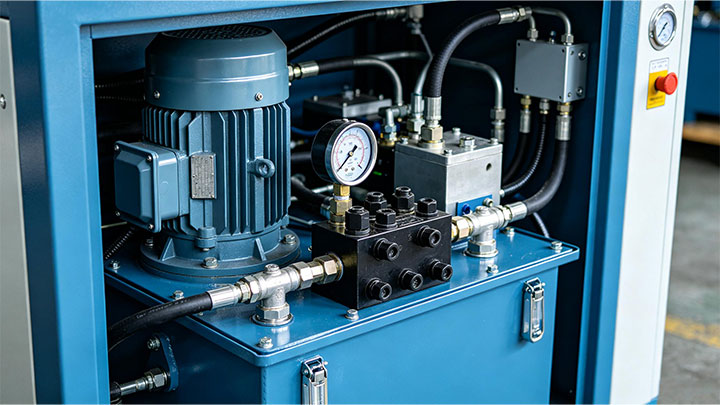
The hydraulic system requires a normally open motor to drive the oil pump to maintain system pressure. The standby energy consumption can reach 30% to 50% of the rated power, and there are problems with hydraulic oil leakage, oil mist evaporation, and waste oil treatment. Some food, pharmaceutical, and electronic workshops prohibit this use; The continuous operation of pneumatic system air compressors consumes high energy and produces exhaust noise. The PUMO servo press motor only consumes power during the movement of the press head, with almost zero standby current and a comprehensive energy-saving rate of 60% to 80%; The whole machine has no hydraulic oil, no oil mist, and no exhaust noise (operating noise<70dB (A)), and can be used in Class 7 or above clean rooms, meeting the requirements of ISO14001 environmental management system.
③ Flexible and programmable to adapt to small batch production of multiple varieties (Industry 4.0 ready)
The replacement of traditional press products often requires the replacement of limit blocks, adjustment of pressure regulating valves, and even changing the position of mechanical stops, which takes a long time and is prone to errors. The PUMO servo press recipe system stores hundreds of sets of process parameters. When changing production, simply select the corresponding product number on the HMI or scan the barcode on the work order with a barcode scanner to automatically call it. The pressing speed curve, starting point, qualified window, and holding time are all switched, and the changing time is less than 30 seconds. It truly realizes "one machine for multiple uses, flexible manufacturing", especially suitable for modern factories with mixed production lines of multiple varieties.
④ Process Quality Error Prevention (Poka Yoke) and Automatic NG Discrimination
By setting multiple judgment windows on the force displacement curve, common defects such as early contact (burrs/foreign object residue on the workpiece), abnormal slope (out of tolerance or incorrect interference fit), under pressure (not pressed in place), over pressure (excessive interference fit or part deformation), and non-contact (missed workpiece) can be effectively identified, with a detection rate close to 100%. This blocks the flow of defective products from the source to the next process, greatly reducing recall risks and claims costs.
⑤ Security and low maintenance costs
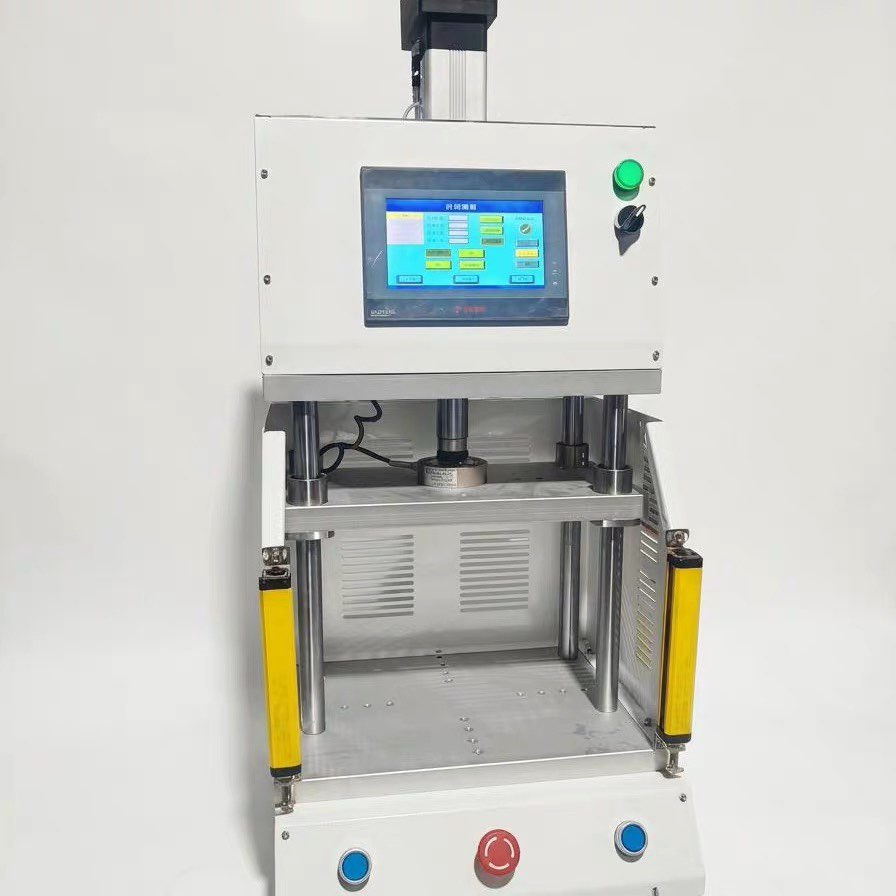
Standard configuration includes dual hand start, safety grating, and STO safety torque shutdown, in compliance with mechanical directives EN ISO 12100 and GB 5226.1; There is no risk of hydraulic pipeline rupture and no frequent sealing replacement of pneumatic components. The annual maintenance cost is about 1/3 to 1/5 of the hydraulic press, mainly including the filling of screw lubricating grease (every 6 to 12 months), sensor calibration, and fastener inspection, without daily consumption such as oil filter replacement, oil change, and air source treatment.
⑥ Low vibration, low heat generation, and long lifespan
The transmission efficiency of servo motor and ball screw is greater than 90%, with no hydraulic impact or cavitation phenomenon, smooth operation and low heat generation; The key load-bearing components (lead screws, bearings, guide columns) are designed with a fatigue life of more than 10 cycles, and the mechanical parts can be used for more than 10 years under normal operating conditions. Multiple protections for overcurrent/overvoltage/overheating/encoder abnormalities in driving equipment, self diagnosis of faults and display of codes and handling suggestions, reducing downtime for troubleshooting.
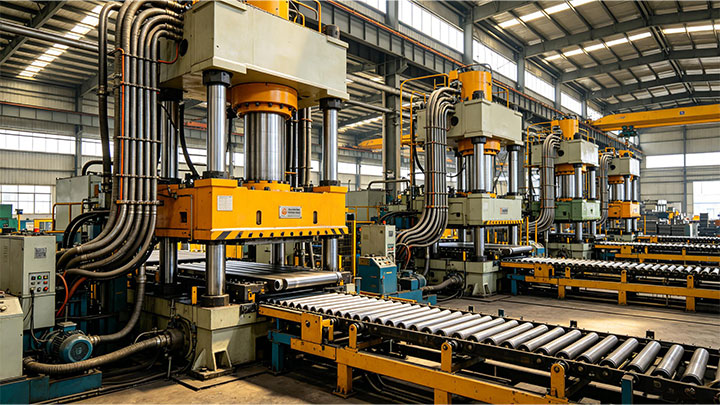
Limitations reminder: For ultra large tonnage (>3000kN/300tf) deep drawing stamping, hydraulic presses are still the main choice (requiring large energy reserves and maintaining bottom dead center), but PUMO servo presses are widely recognized as the best choice for precision pressing, assembly, small part forming, riveting, inspection and other scenarios.