




How to Choose the Right Hydraulic Cylinder for Your Equipment
Hydraulic cylinders are among the most important components in hydraulic systems. They convert hydraulic energy into linear mechanical force and are widely used in construction machinery, industrial equipment, agricultural vehicles, mining operations, and material-handling systems. Selecting the right hydraulic cylinder is essential for ensuring performance, efficiency, and long-term reliability.
The first factor to consider when choosing a hydraulic cylinder is the required force output. The force generated by a hydraulic cylinder depends on the hydraulic pressure and the piston area. Engineers must accurately calculate the load requirements to ensure the cylinder can perform its intended function safely and efficiently. Choosing an undersized cylinder may lead to performance issues, while an oversized cylinder can increase costs unnecessarily.
Stroke length is another critical consideration. The stroke length determines how far the cylinder rod can travel during operation. It is important to select a cylinder with sufficient stroke to complete the desired movement without exceeding design limits. Incorrect stroke selection can result in operational inefficiencies or mechanical damage.
The operating environment should also influence cylinder selection. Equipment used outdoors, in mining operations, or in marine environments may be exposed to moisture, dust, corrosive substances, and extreme temperatures. In such cases, cylinders with corrosion-resistant coatings, stainless steel components, or specialized sealing systems may be required to ensure durability and reliability.
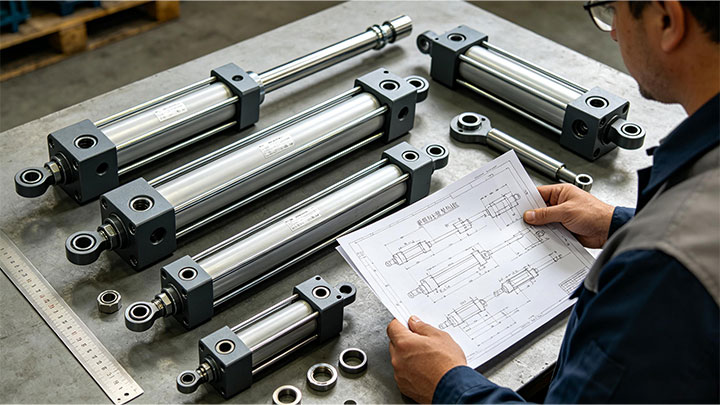
Cylinder mounting style plays a significant role in equipment performance. Common mounting options include flange mounts, clevis mounts, trunnion mounts, and foot mounts. Each mounting configuration is designed for specific load conditions and motion requirements. Selecting the correct mounting style helps reduce stress on the cylinder and extends its service life.
Seal quality is another important factor. Hydraulic seals prevent fluid leakage and maintain system pressure. High-quality seals improve efficiency, reduce maintenance requirements, and protect internal components from contamination. Depending on the operating conditions, manufacturers may recommend seals made from polyurethane, nitrile rubber, or other specialized materials.
Hydraulic fluid compatibility should not be overlooked. Different hydraulic systems may use mineral oils, synthetic fluids, or biodegradable hydraulic fluids. The cylinder's seals and materials must be compatible with the chosen fluid to avoid premature wear or failure. Consulting the manufacturer's specifications can help ensure compatibility.
Speed requirements also influence cylinder design. Applications requiring rapid movement may need cylinders optimized for high flow rates and reduced friction. Conversely, applications demanding precise positioning may prioritize control and stability over speed. Understanding operational requirements helps identify the most suitable cylinder configuration.
Maintenance considerations are equally important. Cylinders designed for easy maintenance can reduce downtime and repair costs. Features such as replaceable seals, accessible components, and durable rod coatings contribute to long-term operational efficiency. Investing in quality components often results in lower total ownership costs over the equipment's lifespan.
Many industries are now adopting smart hydraulic cylinders equipped with sensors and monitoring systems. These advanced cylinders can provide real-time data on position, pressure, temperature, and performance. Such information supports predictive maintenance programs and helps operators identify potential issues before failures occur.
Cost is always a consideration, but it should not be the sole deciding factor. While lower-cost cylinders may reduce initial investment, they may require more frequent maintenance and replacement. Evaluating overall quality, performance, reliability, and support services often leads to better long-term value.
In conclusion, selecting the right hydraulic cylinder requires careful evaluation of force requirements, stroke length, mounting style, operating environment, seal quality, fluid compatibility, and maintenance needs. By considering these factors, businesses can improve equipment performance, reduce operating costs, and maximize the lifespan of their hydraulic systems.