




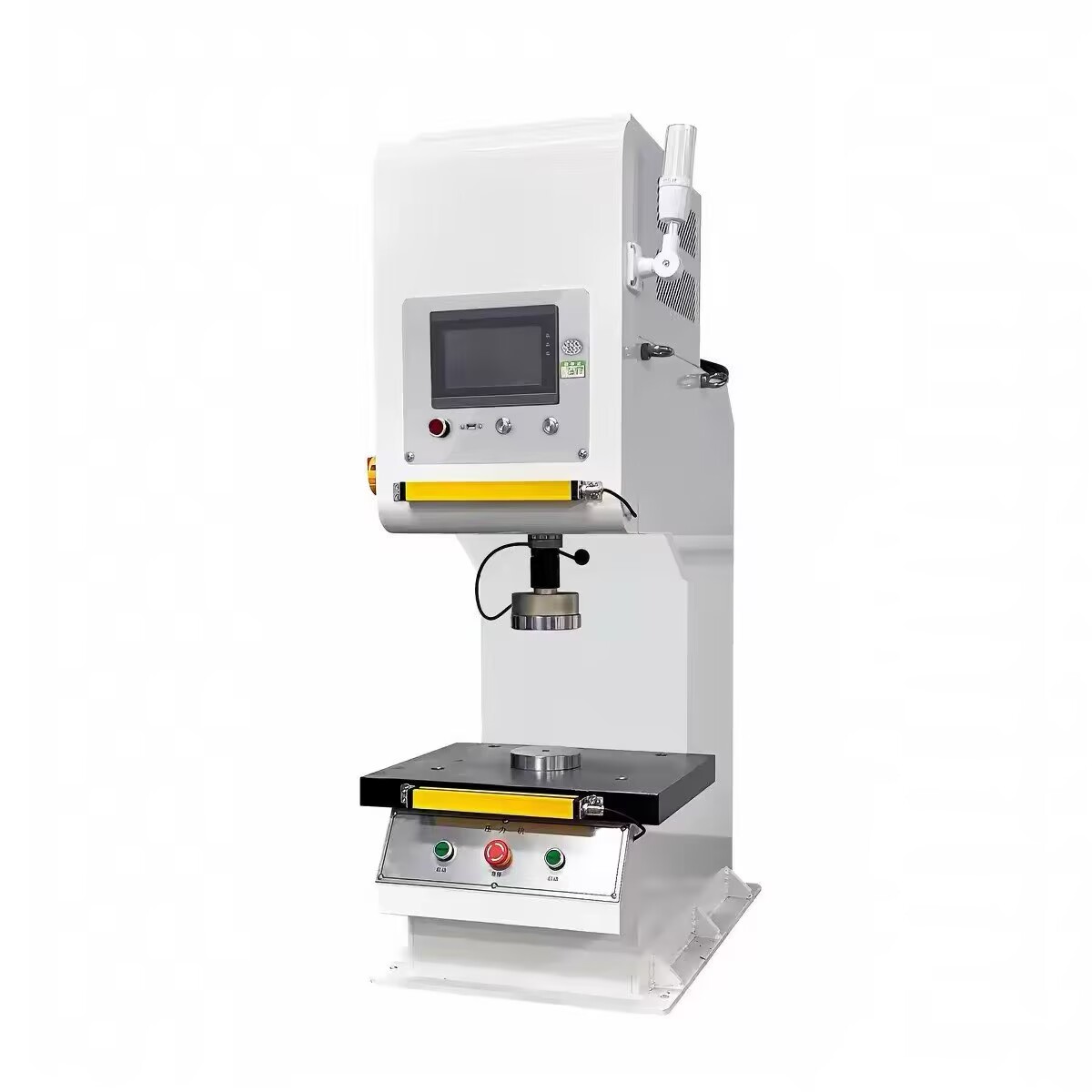
PUMO servo press - application solution for precision pressing of automotive parts
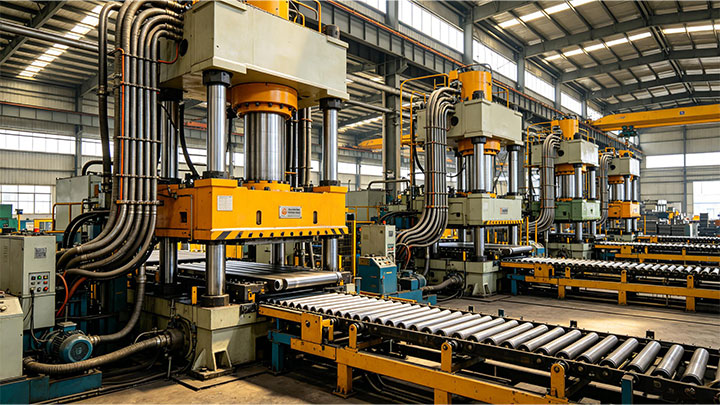
The automotive and automotive parts manufacturing industry is the most typical and mature application field of PUMO servo presses, involving numerous assemblies such as engines, transmissions, axles, steering systems, braking systems, and body accessories
Engine and gearbox components press fit: ① Bearing press into crankshaft/camshaft/gearbox shaft - servo press controls the press fit depth in position mode (such as bearing inner ring pressing to shaft shoulder, depth tolerance ± 0.05mm), monitors the force displacement slope generated by interference fit during press fit, abnormal slope indicates shaft diameter deviation or bearing deformation, abnormal contact point indicates burrs on shaft shoulder, and after press fit is in place, holds pressure for 1-3 seconds to confirm no rebound; ② Oil seal/lip seal ring press fitting - a dedicated imitation pressure head is required to apply uniform force to avoid lip flipping. The force control mode is set to the upper limit of the pressing force to prevent overpressure damage to the skeleton. After it is in place, the endpoint position is detected; ③ Piston pin pressing into piston and connecting rod small head - a typical interference fit, requiring monitoring of the pressing force to ensure that it does not exceed the standard and the exposed length at both ends is consistent. PUMO can be configured with dual pressing heads for synchronous or sequential pressing; ④ Synchronization ring/engagement sleeve/shift fork assembly - multiple parts are sequentially press fitted, and a set of Recipe can be set to automatically execute multiple different parameters in sequence.
Steering system and suspension components: ① Pressure fitting of steering gear rack and pinion bearings, interference fit of steering column universal joint - requires stable and impact free pressure fitting force, precise capture of initial contact in PUMO low-speed detection section (0.5-2mm/s) to avoid biting damage; ② Control arm/subframe bushing (rubber metal part) press fit - the outer diameter of the bushing is in interference fit with the subframe hole. When pressing, the pressing force should be controlled not to exceed the allowable value of the rubber part and the pressing depth should be precise (usually aligned with the marked line). The force displacement curve can determine whether there is a misalignment of the bushing (sudden change in force slope on one side); ③ Shock absorber spring seat pressing and riveting - Some models integrate riveting die heads, and after pressing in place, switch to pressure holding to complete the deformation of the riveting point.
Braking system and transmission shaft: ① Brake disc and wheel hub bolt compression/centering, brake caliper piston retraction test (reverse tension test); ② Drive shaft universal joint cross shaft bearing (needle roller bearing cup) press fitting - it is often necessary to press both ends synchronously or flip one end first and then press the other end. PUMO supports dual machine linkage or single station with flip fixture; ③ Differential half shaft gear and planetary gear shaft press fit - For heavy housings, four column large table models are selected, equipped with positioning fixtures and center push outs.
Quality traceability and IATF16949 compliance: Each press fit curve is bound and stored according to VIN code or part barcode, and the retention period can be set according to customer requirements (usually 3-10 years). It supports batch retrieval, export to Excel/CSV, and generation of SPC (Statistical Process Control) charts - mean range chart (XR chart), histogram, Cpk/Ppk calculation, helping suppliers pass the OEM audit. Some host manufacturers require equipment to have VDA 6.3 process audit qualifications, and PUMO provides force displacement evaluation logic instructions and guidance on setting judgment windows that comply with VDA recommendations. When integrated with the automatic conveyor line, PUMO shakes hands with the line PLC through Profibus DP/PROFINET/EtherNet IP: requests workpiece → confirms fixture clamping → starts pressing → completes OK/NG signal → allows picking/rejection to NG material path, and the entire process is interlocked to ensure no misoperation.