




PUMO Servo Electric Cylinder - Working Principle and Motion Control Analysis
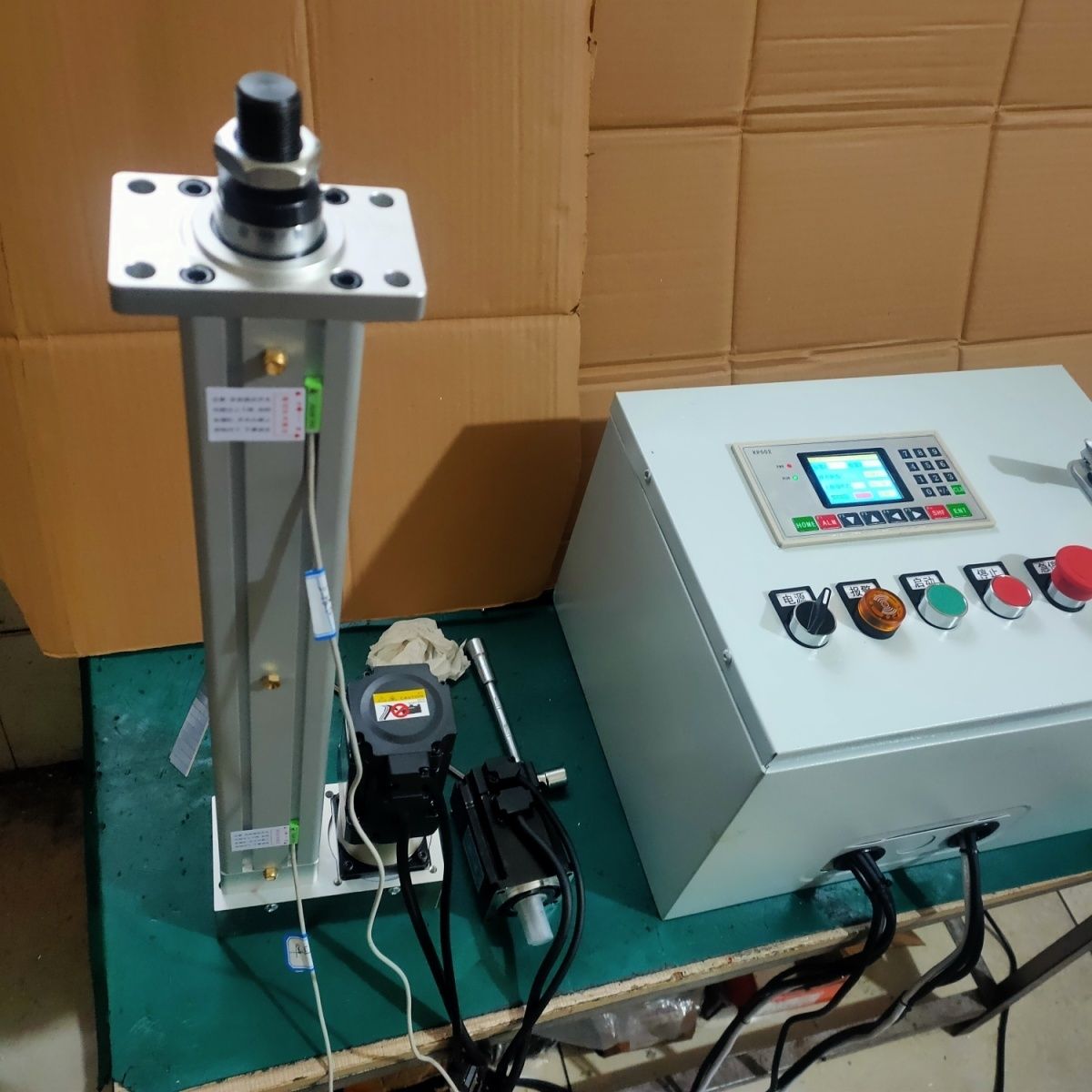
The basic working principle of PUMO servo electric cylinder is the precise conversion of rotary motion to linear motion, and its operation process is based on the servo closed-loop control system. When the upper controller (such as PLC or motion control card) sends position, speed, or thrust commands to the servo drive, the servo drive outputs three-phase currents of corresponding frequency and voltage to drive the servo motor to rotate according to the commands; The output shaft of the servo motor drives the precision screw inside the cylinder to rotate through a rigid coupling (linear) or high-strength synchronous belt (folding/right angle); The rotational motion of the screw is converted into linear displacement along the axial direction by the nut, thereby driving the piston rod and load to perform reciprocating linear motion.
Throughout the entire motion process, a high-resolution encoder (incremental or absolute) installed at the end of the servo motor or screw collects real-time information on the motor angle and speed, and feeds it back to the servo driver. The driver compares the feedback value with the command value and dynamically corrects the output through PID algorithm, forming a tight position velocity current three loop control, effectively eliminating errors caused by transmission clearance and external interference, and ensuring that the actual displacement at each moment matches the preset trajectory height. If a pressure sensor or load detection unit is selected, thrust closed-loop control can also be achieved. In the precision pressing process, the target pressing force is set and the pressure displacement curve is monitored in real time. Once the set threshold is exceeded, an alarm or stop is immediately triggered to prevent damage to the workpiece due to overpressure.
The transmission components used in PUMO servo electric cylinders are mainly precision ball screws and planetary roller screws. Ball screws rely on the circulating rolling of balls in the spiral raceway to transmit motion, with low friction, high transmission efficiency (>90%), and low temperature rise, making them the mainstream choice for medium to high speed and medium load applications; The planetary roller screw is supported by multiple cylindrical rollers in linear contact with the screw and nut, with a large contact area, high rigidity, and strong impact resistance. It is suitable for heavy-duty, long-term pressure holding, and high-frequency impact conditions. Both can eliminate axial clearance by pre tightening with double nuts, ensuring no clearance during reverse positioning. In addition, the built-in anti rotation structure in the cylinder block restricts the piston rod from rotating around the axis, ensuring the purity of linear motion; Both ends are equipped with adjustable mechanical limits and electronic soft limits for dual protection, avoiding damage to internal components caused by overtravel impact and ensuring long-term stable operation of the equipment from a mechanistic perspective.