




PUMO servo electric cylinder - detailed explanation of three major structural forms and installation methods
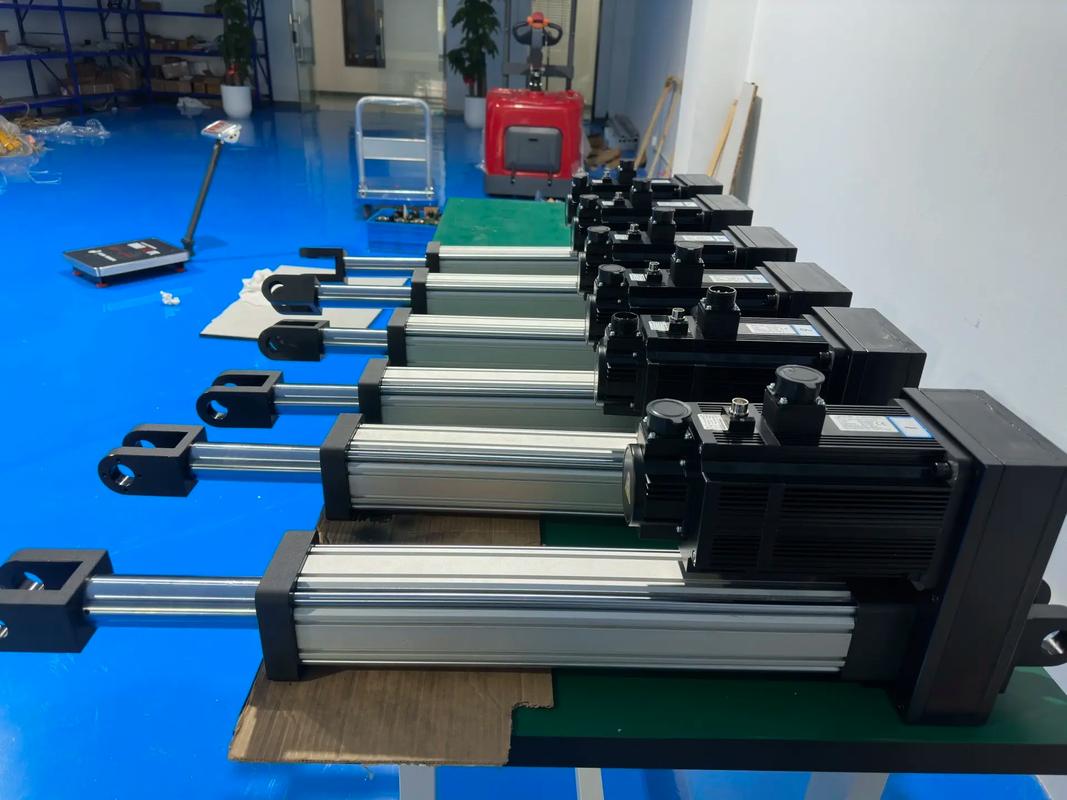
PUMO servo electric cylinders offer three classic structural forms: linear, folding, and right angle, to meet the spatial layout and mechanical requirements of different automation equipment. Linear type, also known as coaxial type, is a type where the servo motor shaft and the screw shaft are in the same line, and the screw is directly driven by a diaphragm or a plum blossom coupling. It has fewer intermediate links, small transmission inertia, and extremely small reverse clearance, resulting in the highest positioning accuracy and fastest dynamic response. It is suitable for installation in pressing, stamping, and online inspection stations with sufficient depth and strict precision requirements; The disadvantage is that the axial occupation length is relatively large (including the length of the motor body).
Folding type, also known as parallel or side mounted type, has servo motors arranged parallel to one side of the cylinder body, and power is transmitted to the screw through high-strength synchronous belts and pulleys for deceleration. This structure significantly shortens the axial installation length of the electric cylinder, equivalent to only adding a small amount of hood width to the cylinder body, making it very suitable for low rise automated assembly lines, packing machines, and material pushing stations with limited longitudinal space. Synchronous belt transmission has a certain damping effect, which can be adjusted by changing the gear ratio of the belt to obtain greater thrust or reduce the speed of the screw. However, it is important to regularly check and adjust the tension of the synchronous belt to prevent tooth jumping.
Right angle type, also known as vertical or angular type, is a type where the servo motor is arranged perpendicular to the cylinder body and the power is transmitted to the screw through a first or second stage spiral bevel gear reducer by turning 90 degrees. This form of structure is the most compact, and a large reduction ratio can be obtained through a reducer to significantly increase the output thrust. It is suitable for lifting, clamping, and flipping mechanisms with small spaces but requiring high thrust. All three forms can be flexibly equipped with installation accessories such as front flange, rear flange, ear shaft (single ear shaft/double ear shaft), tail hinged ball head and side mounting plate. The piston rod end can be equipped with U-shaped clamp, ball joint or internal thread connection. Some models come with built-in linear guide rails to withstand lateral loads. For vertical installation of lifting loads, it is recommended to choose a servo motor with a power-off brake to prevent slipping due to power failure; When applying multi cylinder linkage, a customized synchronous push rod mechanism can also be used to ensure multi-point consistency in position.