




PUMO CNC Machine Spindle - Core Structure Composition and Key Components Detailed Explanation
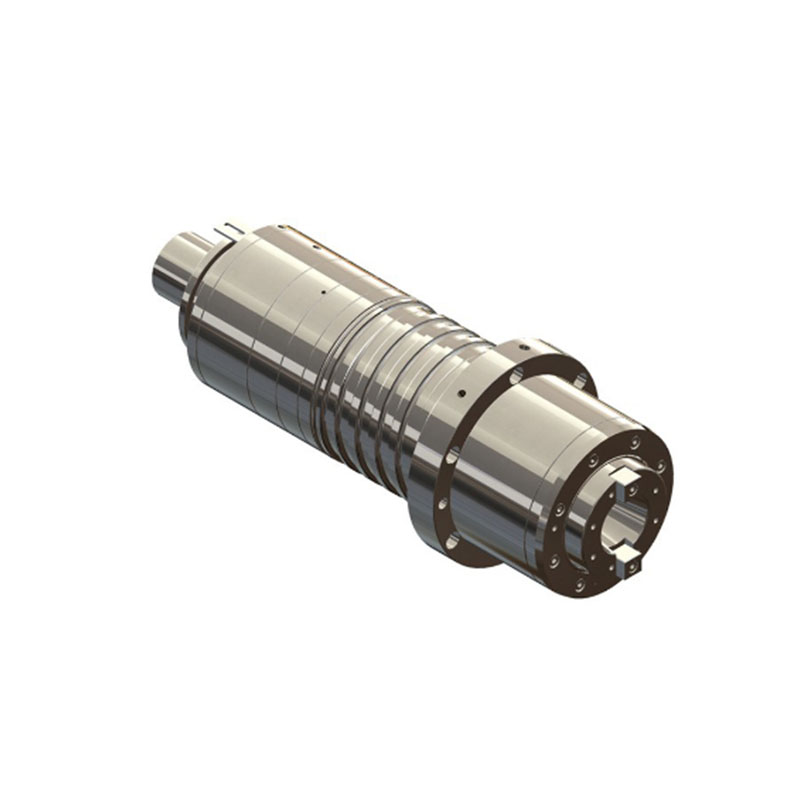
The PUMO CNC machine spindle is a high-precision electromechanical integrated component that has been precisely designed, assembled, and debugged. Its main components include the following six subsystems: spindle shaft system and bearing components, drive motor unit, loosening knife and tool clamping system, cooling and lubrication system, detection and feedback unit, installation housing and sealing protection.
① Main shaft system: The main shaft body is made of high-quality alloy steel (such as 40CrNiMoA or the same level) through forging, rough machining, quenching and tempering treatment, and precision grinding. The front end is made with standard taper holes (BT/HSK/CAPTO, etc.) and end face positioning flanges for installing tool holders or inspection rods; The rear end is connected to the motor rotor (electric spindle) or to the transmission connector (pulley/coupling flange). The spindle taper hole and end face are precision ground, with a contact area of ≥ 80%, radial runout ≤ 0.003mm (precision type ≤ 0.002mm), and axial displacement ≤ 0.002mm.
② Bearing components: are the decisive factors affecting the rotational accuracy and stiffness. PUMO high-speed spindles commonly use paired angular contact ball bearings (AC contact angle of 15 ° or 25 °). The front two to three pairs of back-to-back (DB) or face-to-face (DF) configurations bear radial and bi-directional axial loads, while the rear support often uses a double or cylindrical roller bearing to provide radial support and allow axial floating to release thermal expansion. High speed precision type (n ≥ 15000rpm) uses hybrid ceramic ball bearings (steel raceway+Si3N4 ceramic ball), which have low density, low temperature rise, high hardness, and good insulation. The maximum speed can be increased by 20% to 30% compared to all steel bearings; Ultra high speed/ultra precision types can be equipped with either air bearing (non-contact, zero friction, suitable for optical processing) or static pressure oil film bearing (extremely high stiffness, suitable for heavy-duty grinding).
③ Drive unit: The belt/direct spindle is equipped with an independent spindle motor (asynchronous or permanent magnet synchronous), while the electric spindle has the stator embedded in the housing and the rotor mounted on the spindle, matched with a high-frequency frequency converter (electric spindle usually requires an output frequency of 100-1000Hz) or vector servo drive. The permanent magnet synchronous servo spindle has greater torque and precise C-axis positioning in the low-speed range, making it suitable for turning milling composites and situations that require spindle servo.
④ Loosening knife mechanism: composed of a disc spring group (or cylinder/hydraulic cylinder), a pull rod, a pulling claw (usually according to MAS403/BT or ISO7388 standards), and a cutting cylinder. In the default state, the disc spring force tightens the handle onto the spindle taper hole (clamping force is usually 800-2000kgf depending on specifications). When changing the tool, the cutting cylinder overcomes the disc spring force and pushes the pull rod to release the handle; When resetting, the pressure relief disc spring of the knife cylinder rebounds and re clamps. Some models are equipped with clamping force detection switches and air blowing cleaning nozzles. Before changing the tool, the spindle taper hole should be blown clean with compressed air.
⑤ Cooling and lubrication: The electric spindle housing is equipped with a water-cooled/oil cooled jacket and an external temperature controlled cooling unit; The lubrication methods for bearings include: a) grease lubrication - medium low speed, easy maintenance; b) Oil air lubrication - high-pressure compressed air carrying trace amounts of lubricating oil is timed to spray into the bearing raceway, suitable for high-speed and high-precision spindles; c) Oil mist lubrication - an earlier technology, is gradually being replaced by oil and gas. Reasonable lubrication can reduce bearing temperature rise, extend service life, and reduce vibration and noise.
⑥ Detection feedback: Install absolute/incremental encoders or rotary transformers in the backend for speed feedback and C-axis orientation; High end models are equipped with vibration sensors, stator windings, and Pt100 temperature sensors on the front cover to achieve online monitoring of spindle health status. The entire component relies on skeleton oil seals, labyrinth non-contact seals, and pressure seals (positive pressure air curtains) to prevent coolant and chips from entering.
PUMO strictly follows the assembly process for all spindles before leaving the factory: bearings undergo ultrasonic cleaning → frozen/hot fit interference fit → precise application of pre tightening force (controlled by grinding the thickness of the spacer) → spindle component dynamic balance correction (removal of heavy screws or counterweight slots) → no-load running in ≥ 2 hours → temperature rise/vibration/noise/jumping full inspection → issuance of inspection report for archiving.